
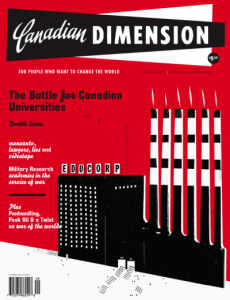
 For those interested in a little background, but specifically tied to our own University of Manitoba, the September/October 2005 edition of Canadian Dimension is particularly apt. Among other articles touching on the privatization of and corporate influence on Canadian universities, there is an article that delves into the attempt by the U of M to suppress the film “Seeds of Change” which documented the takeover of Manitoba agriculture by that agribusiness vulture, Monsanto. It examines the connection between the University and Monsanto, especially the invitation to Monsanto to set up shop in the University’s Smartpark.
CHILDCARE 2020 conference report
 CUPE 3909 is comprised of academic student and sessional workers, some of whom are also parents struggling with locating regulated child care in Manitoba. The deficiencies in the availability of quality child care impacts the ability to work and study effectively and as such CUPE 3909 supports the increased availability of child care on our campuses. Recently I had the distinct pleasure and honour of representing CUPE 3909 at ChildCare 2020 conference. ChildCare 2020 was hosted at the Fort Garry Hotel in Winnipeg from November 13-15 and was the first national child care policy conference in 10 years and only the fourth in Canada’s history. The goal of the conference was to renew action on early learning and child care in Canada. Over the three days, attendees discussed the need for a national child care program which is non-profit, accessible, affordable and high quality child care for all Canadians.
During the conference, there were a number of plenary sessions, most notably, an opening address by Premier Selinger who spoke to the provincial NDP’s commitment to the universal and accessible child care for Manitobans. Following Premier Selinger’s opening address the key note speaker Stephen Lewis spoke passionately to the ineffectiveness of income splitting and recent tax credits having nothing to do with child care. He spoke to the need for early learning and care that is inclusive and highlighting that child care speaks to the fabric of our nation.
The conference proceeded with a number of mini-plenary and workshops exploring child care in Canada, including who is responsible for child care? How do we pay for child care? How to move the movement forward? to name a few. The conference also took great strides in identifying common misconceptions regarding universally accessible child care, such as the economic consideration. For example some believe a national child care system would simply be too expensive and require large tax increases to cover the costs, when in fact research from Quebec which currently has $7 a day child care, found that for every dollar invested in child care the economy sees up to a $1.75 return through increased participation in the workforce and the creation of jobs. Research also demonstrates that the amount the current federal government’s income splitting scheme, which provides over 85% of Canadians without any kind of return, could cover the cost of child care for any and all Canadians who need it.
Another notable session of the event was a speech by the Leader of the Opposition, Thomas Mulcair and a video message from Liberal leader Justin Trudeau. It is important to note that invitations were sent to the Conservative party however, no one chose to attend. Thomas Mulcair reiterated his party’s recent announcement for the provision of $15 a day child care to be rolled out over two terms. Justin Trudeau spoke to the importance of the gathering and the liberal party’s commitment to family, however, no promises regarding child care were made.
Overall, the conference highlighted the reality so many of our members are facing: inaccessible, expensive and questionable child care options. It is time for child care to be made a priority and for development of a national program that provides universal, non-profit, accessible and high-quality care for our children, the future of Canada.
Click here for more information on ChildCare2020.
Academic Madness and the Politics of Exile
 In his latest article Henry Giroux points to the creeping “pedagogical terrorism” that is strangling the academic world. But not being one who would merely criticize the “enemy” he turns his gaze to those “liberals and progressives” in academia who are busy digging their own graves with an amazing “ideological self-righteousness.”
We would do well to heed his words, to come together through our own collegial activities and our union rather than sniping at colleagues and playing the divide et impera game which plays into the hands of those trying to silence us, and, in some cases destroy our jobs.
Read the whole article, Academic Madness and the Politics of Exile here.
THE PRECARIAT: SESSIONAL AND STUDENT ACADEMIC WORKERS
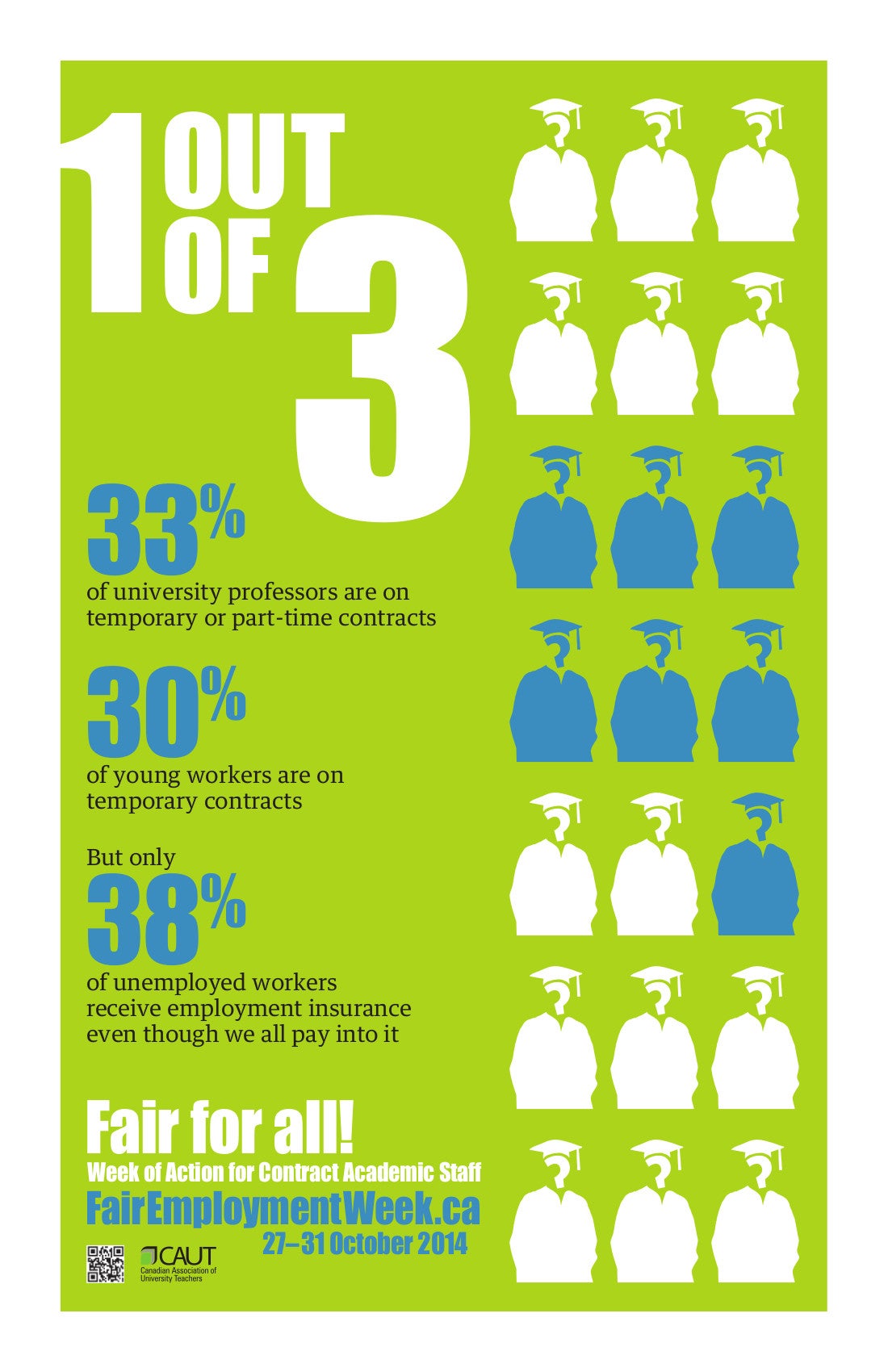 On October 28 CUPE 3909 held a dinner for Sessional Academic Workers in appreciation of their contribution to the University of Manitoba and as part of Fair Employment Week. Fair Employment Week is an initiative of the Canadian Association of University Teachers (CAUT), and is a week designated to remember that all academic work must be fairly supported, validated, and remunerated.
At a time when 33% of professors at Canadian universities are on temporary or part time contracts, the plight of sessional, adjunct, and contract professors as well as graduate students who work as lecturers or instructors, remains a topic of discussion. The president’s column for the CAUT Bulletin “Ivory towers have a dirty little secret”, which dealt specifically with this issue, appeared in the Winnipeg Free Press.
Noam Chomsky recently spoke to the Adjunct Faculty Association of the United Steelworkers in Pittsburgh where he remarked on the similarities between the corporate business model designed to reduce labor costs and increase labour servility and the corporatized university that is increasingly hiring precarious workers. Read article here.
Early in October, Post-doctoral fellows at Dalhousie University voted to join the Public Service Alliance of Canada (PSAC), joining the growing number of precarious university workers seeking union representation to contend with their concerns about pay levels, benefits, and working conditions.
GENERAL MEMBERSHIP MEETING
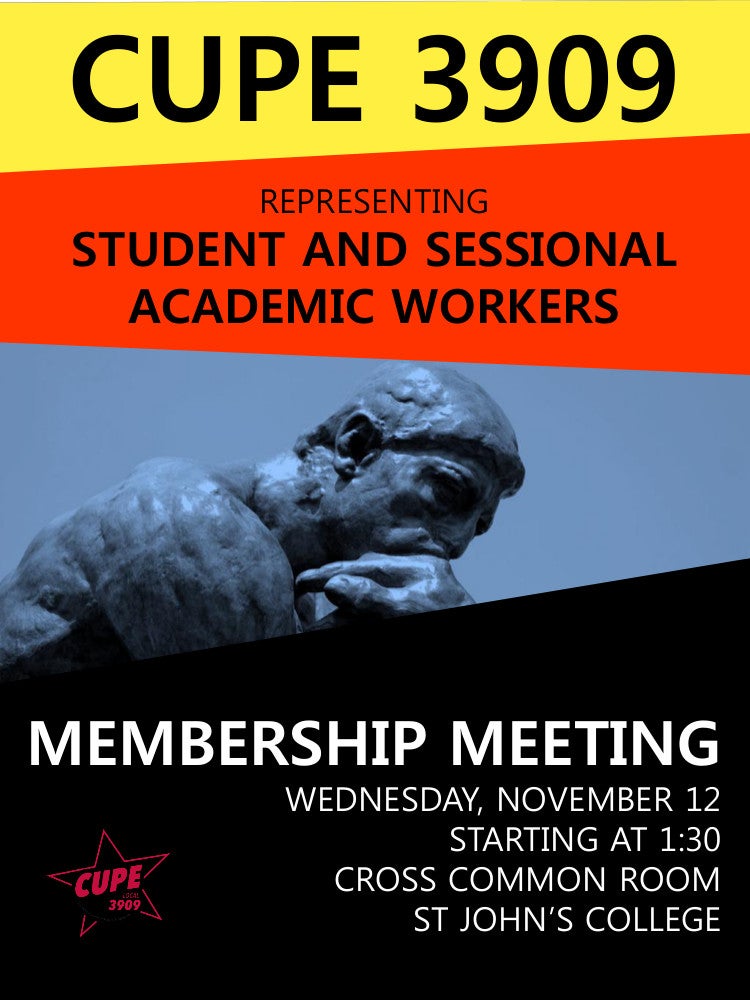 You are invited to attend this term’s CUPE Local 3909 membership meeting. The Executive will provide updates and we’ll announce the winners of the Unit 1 Bargaining Unit draw for 2 Future Shop $100 gift certificates.
The meeting starts at 1:30 in the Cross Common Room of St John’s College but feel free to drop by later.
Lunch will be provided.
Henry Giroux on the effects of “casino capitalism” on education
In an interview published by Truthout on October 13, 2014, Henry Giroux, well-known activist and writer, exposes the conceptual framework by which Neoliberal forces attempt to co opt the university for their own nefarious ends. He points to the negative effect of increasing privatization of education on the quality of as well as access to education. Giroux believes that university education is now less about constructing a future than about training students for the workplace and that because of this, many universities are shifting focus away from programs and departments that do not lend themselves to business interests. While the article deals mostly with the situation in the US, Giroux’s commentary is easily applied to Canadian universities. Read the interview here.
Dinner for Sessional Academic Workers
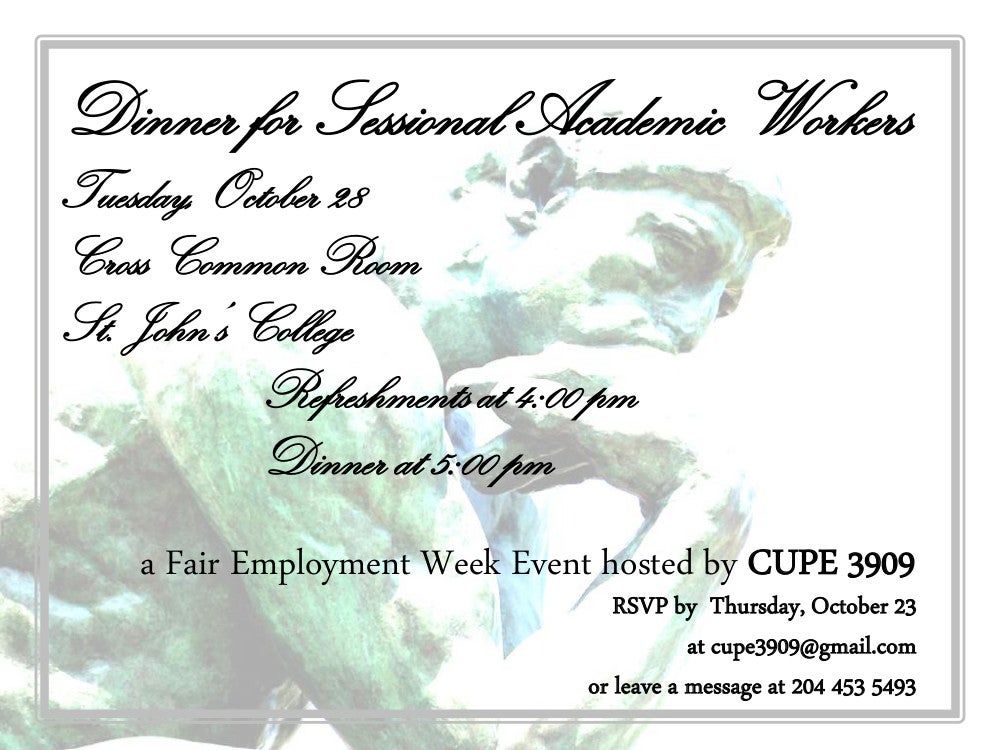 On Tuesday, October 28, CUPE Local 3909 will be hosting a dinner for Sessional Academic Workers. We will meet at 4:00 in the Cross Common Room at St. John’s College for refreshments and Dinner at 5:00. Look for your invitation in the mail and please RSVP by Thursday, October 23.
SESSIONAL INSTRUCTORS AND CONTRACT FACULTY MAKE THE NEWS
As those of us in CUPE 3909 know, Universities have been increasingly relying upon Sessional Instructors to teach a higher percentage of their undergraduate courses over the last decades. Years of decreased government funding and neo-liberal style management of University finances on the part of administration have meant that funding has not developed to hire new tenure-track faculty or replace those who retire. At the same time, enrolment has continued to rise. Picking up the slack has been a low-paid casual labour pool made up of the many Masters and PhD graduates who cannot find full time academic employment. This phenomenon has been receiving greater media attention in recent years, and this fall once again a number of articles and news reports have appeared on the subject. CBC Radio One, in fact, aired a one-hour documentary on the subject entitled, “class struggles” on Sunday Edition with Michael Enright on September 7. (Listen to the documentary here.) This was accompanied by a news report stating that more than half of undergraduate courses are now being taught by contract academic staff and discussing the poor working conditions under which these staff labour.
University Affairs has also once again turned their attention to the topic. In a piece called “Academy of Broken Dreams“, Tim Pettipiece has detailed his own experience with teaching, research and publication resulting only in frustration as the few tenure-track jobs that do exist go to other candidates.
In his response, University Administrator John Osborne agrees that a “lost generation” has been created in the academic world due to a lack of funding which prevents universities from hiring. In a later article, he also agrees with Pettipiece’s controversial assertion that hiring committees for the few jobs that do exist favour British or American scholars over those trained in Canada.
All of these are worthwhile reads. However, while it is important for sessionals who are “frustrated academics” to understand that their current position is a result of systemic factors and not personal failing, this insight only goes so far toward providing real help. Bemoaning the lack of tenure track positions does not call them into being and the reality is that it is unlikely that our current governments will suddenly provide the funding necessary to hire new tenure-track faculty. Nor have Universities, including U of M, paid anything but lip service to the notion of converting sessional positions into more secure full time positions as professors or instructors. Sessional Instructors need to continue to fight for recognition, respect and better working conditions within a situation that is unlikely to change any time soon.
Drinks, food, meet, greet
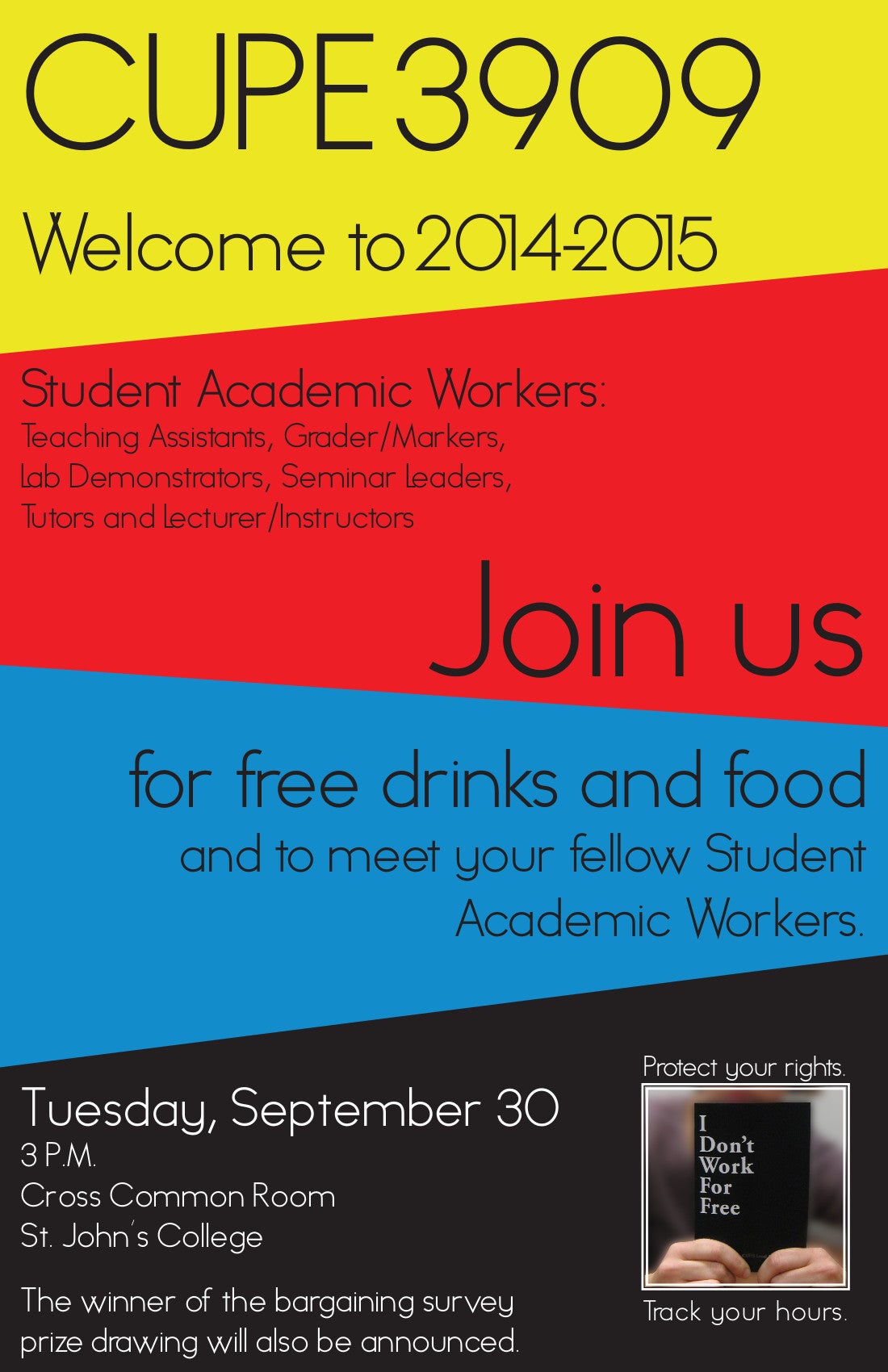
We will be holding an event for Student Academic Workers on Tuesday, September 30. Come get together for food and drinks with your fellow grader/markers, TAs, lab demonstrators, seminar leaders, tutors, and lecturer/instructors.
We will also announce the winners of the two $100 gift certificates for those of you who helped us out with the Unit 1 Bargaining Survey.
National Post-Secondary Education Task Force – LOCAL REPORT
Brianne Goerzen
During the first week of April 2014 CUPE National called an All Committees meeting. The meeting allowed for the various CUPE National committees to meet and discuss the general direction of individual committees. The meeting also gave committee and task force members the opportunity to meet members outside their respective groups and partake in larger group sessions. There were a number of guest speakers that spoke on a variety of topics including how to move the labour movement forward and organizing for the next generation.
The Post-Secondary Education Task Force is composed of brothers and sisters from across Canada, including representatives from British Columbia, Saskatchewan, Manitoba, Ontario, Quebec, Newfoundland and Labrador and New Brunswick. Over the duration of the meeting, members provided an update regarding their respective provinces. The group also discussed current plans in action and planning for the months ahead. The Post-Secondary Task Force main campaign is advocating for the creation of a National Post-Secondary Act. A National Post-Secondary Act would legislate high quality, mandatory funding levels, reduce tuition fees, eliminate deferred maintenance at Colleges and Universities and ultimately ensure the public good of post-secondary institutions.
Keep an eye out for future materials that can be used across campuses to promote the National Post-Secondary Act and ensuring public education for the public good.